Recovering Out Loud | Vanessa Keeton’s Story

During the late 1990s’ coal boomed in Appalachia. Life was simple, miners made good money, and friends, along with neighbors, were like family. But, an unforeseen epidemic descended on the quite small towns of Eastern Kentucky. It’s a battle they still face today, addiction. “It robbed 13 years of my life.” Many know Vanessa Keeton […]
Now Open | ARC Chemical Dependency Treatment Center
In late July, Addiction Recovery Care started accepting male and female clients requiring a higher level of care at our Hazel Hills location in Owingsville, Kentucky. The ARC Chemical Dependency Treatment Center (CDTC) is for individuals suffering from SUD who require intensive medical assistance with withdrawal management. The CDTC allows us to provide intensive medical […]
Comprehensive, client-centered treatment key to evolving addiction epidemic

When Addiction Recovery Care (ARC) began accepting clients at its first treatment center, Karen’s Place, back in 2010, most women walking through the doors were struggling with opioids. According to the CDC, that year marked the beginning of the opioid epidemic’s second wave, marked by rapid increases in overdose deaths involving heroin. More than a […]
Congressman James Comer visits Crown Recovery Center

U.S. Representative James Comer (R-KY) visited the Crown Recovery Center, a residential treatment facility on the old St. Catharine’s College campus in Washington County, on Thursday, August 18th. During a roundtable discussion, Congressman Comer was joined by many of Addiction Recovery Care’s area workforce partners. They discussed how everyone works together to bridge the gap […]
As Market President for Kentucky, Addiction Recovery Care’s John Wilson will lead Our Lady of Bellefonte hospital transformation
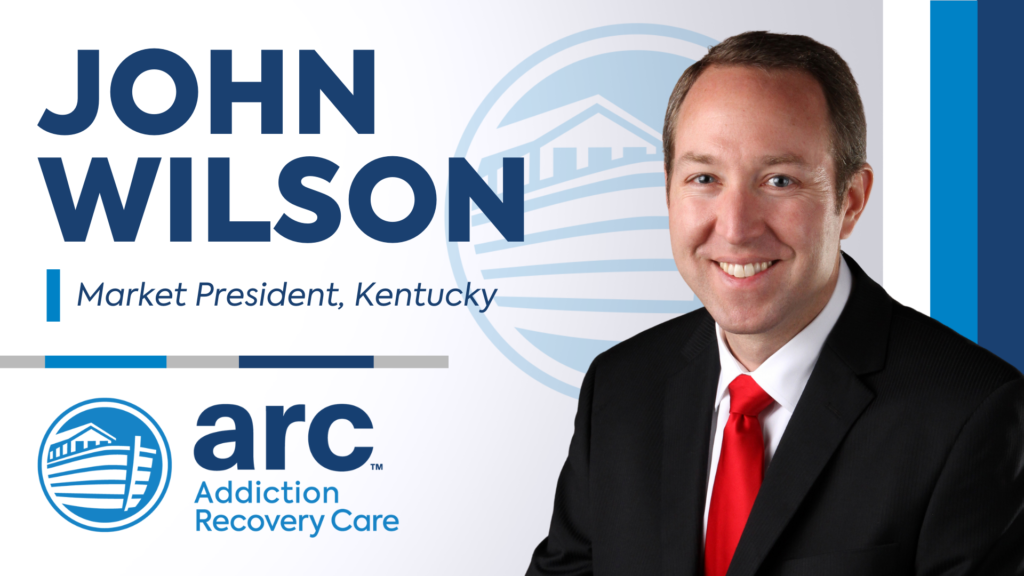
Louisa, Ky.—Addiction Recovery Care (ARC) is proud to announce John Wilson’s promotion to Market President, Kentucky. Wilson joined the organization in 2020 as CEO of Crown Recovery Center in Springfield and was then named Market CEO in January 2022. Now, as ARC’s Market President for Kentucky, he will lead the company’s efforts to expand in […]
How Medically Assisted Treatment changed my life

Medically Assisted Treatment (MAT) can help a person suffering from Opioid Use Disorder gain a life they never knew possible. According to National Institute of Health (NIH) research, MAT is proven to reduce overdoses. Among other benefits, medical literature supports that Medically Assisted Treatment is effective in increasing retention in treatment centers, increasing the person’s […]
‘We stand by them’: ARC employees assist in southeastern Kentucky cleanup efforts

Addiction Recovery Care (ARC) employees wasted no time jumping into action following devastating flooding in southeastern Kentucky. “Kentucky is a loving state, and when we see our neighbors hurting, we want to step in to help,” said ARC’s CEO Office Coordinator Shannon Pope. Pope joined dozens of other ARC employees and clients to assist 22 […]
Addiction Recovery Care names Brandon Parsons Enterprises Director

Addiction Recovery Care (ARC) is pleased to announce Brandon Parsons as the Enterprises Director. “I am beyond ecstatic to join the ARC Team, not only for the positive footprint they have left on the communities of Eastern Kentucky but also the parallel core values that ARC and I both share,” said Parsons “They have raised […]
Flood Resource Guide to Shelter, FEMA, Healthcare, Food, Supplies

As many parts of Eastern Kentucky continue the cleanup process Addiction Recovery Care is committed to helping our neighbors during this trying process. Below you can find resources that can assist with housing, healthcare, and food/supply needs. Housing/Business Losses/Shelter Fema | https://www.disasterassistance.gov/ or call 1-800-621-FEMA Must be located in Breathitt, Clay, Knott, Letcher, and Perry […]
World Hepatitis Day | What should you know?
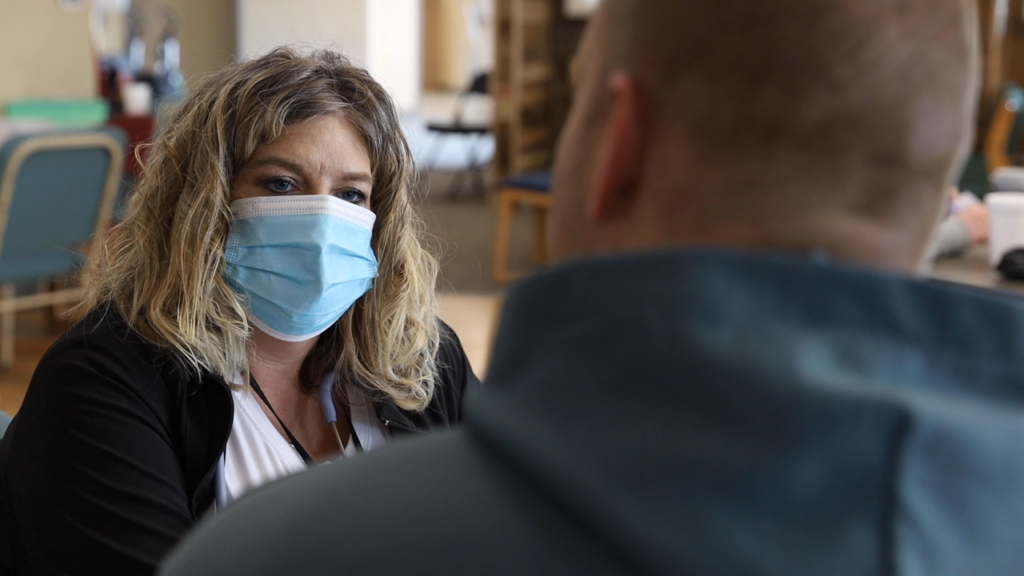
Experts estimate that about 2.4 million people in the United States live with hepatitis C. The disease causes liver inflammation, most commonly caused by a viral infection (HCV). Today, most people become infected with hepatitis C by sharing needles and other equipment. Hepatitis C can also be spread during birth from mother to baby. IT […]